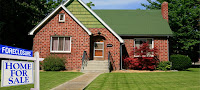
Showing posts with label Foreclosure. Show all posts

10.22.2010

FORECLOSURES IN MICHIGAN

Michigan is among the hardest hit foreclosure states in the Nation. In August 2010, the state’s foreclosure rate increased 128% over August 2009 and it remains among the top five states in the Nation in foreclosure totals. In July 2010 alone, 1 in 241 housing units in Michigan received a foreclosure filing.
Bookmark and Share

What is a REO?

Foreclosure is a legal process by which a defaulting borrower is deprived of their interest in the property. Real estate owned (or REO), on the other hand, is a real estate asset owned by the lender that is taken back during the foreclosure process. Foreclosures are legal proceedings not listed homes.
Bookmark and Share

10.15.2010

Should You Buy a Foreclosed Property Right Now?

These houses are tempting for scores of first-time homebuyers, second-home seekers and people looking to get an early jump on buying a retirement home while prices and interest rates are low. So given the pitfalls, are they crazy? The answer is no, not always.


It’s important to keep some things in mind. Think hard about the following 3 factors if you find foreclosed homes even remotely enticing.

THE LOAN: Many banks would prefer to sell to an investor who will pay cash. You may need a mortgage and your need for bank approval can delay the sales process. Lenders will usually only give you a loan on homes that are ready to be lived in. Many foreclosed homes need basic repairs such as installing toilets, sinks, and appliances.

THE INSPECTION: You’ll want to make any bid for a home contingent on a thorough inspection from someone familiar with foreclosed properties. Mold may be a concern given that many foreclosed homes have been uninhabited for months. You should arrange to have the power and water turned back on before the inspection if possible to ensure that pipes are sound and electrical is safe.

THE TITLE INSURANCE: This is a must in the event that a former owner somehow wins back rights to the foreclosed home you end up buying, and then tries to kick you out, you will need to make a title insurance claim.

Take your time. Assemble a panel of experts and watch the listings carefully. For better or for worse, foreclosed properties are going to be available for a very, very long time.

Bookmark and Share

10.11.2010

BEFORE YOU JUMP INTO THE HOT FORECLOSURE MARKET - TEST YOUR KNOWLEDGE

As a general rule, foreclosed homes sell for less than their market value. - False

If you bid on a foreclosed property at an auction, you also may be bidding on tax liens and other debt accrued by the prior home owners. - True
Home owners who always pay their mortgage on time don't need to worry about foreclosed homes in their neighborhood. - False
Home owners can sidestep foreclosure by transferring the title of their home to a foreclosure rescue company for a year or two. - False
Once home owners default on three mortgage payments, the home automatically goes into foreclosure. - False
Owners of foreclosed homes can reclaim their property - even after someone else has already bought it - by paying off the loan along with any interest, taxes, and penalties within the redemption period. - True
Lenders stand to benefit when home owners default on their mortgage. - False
http://www.realtor.org/rmoquiz2.nsf/foreclosurequiz?openform

Once a bank takes possession of a foreclosed home, the previous owner is free of all financial obligations. - False

Bookmark and Share

10.09.2010

FORECLOSURE IN THE NEWS

Reported by crainsdetroit.com, Michigan is not likely to be impacted by the issues raised with national lenders, said David Trott; president of Farmington Hills based Trott

& Trott PC involved with about 2/3rds of all Michigan foreclosure filings. At issue has been a practice by banks to use so-called “robo signing,” putting signatures on some court documents without reading them. In Michigan less than 1% of all foreclosures go through the courts, so affidavits signed without being read will not likely be an issue according to Trott. “Our process is much simpler here, and we typically don’t have affidavits,” Trott said. “I’d be surprised if this is the basis to unwind any foreclosures in Michigan.”


Bookmark and Share

7.26.2010

HIGHER END HOMES BRING MULTIPLE OFFERS


Metro Detroit buyers in the $500,000 plus market are finding in hard to buy "move-in" ready homes. Houses in good condition often bring multiple offers. If they are persistant, they can find a house with all the "extras", but in many cased these houses need some work. The inventory includes many foreclosed and short sales house where the fixtures have been stripped or the condition of the house requires some work. For a great article on this subject, visit "Good deals are at the high end, but finding them takes some work" Bookmark and Share

1.17.2010

Foreclosures Soar Despite Effort to Delay Them

This is an excerpt recent Free Press (Jan 14th) article that includes our company president's remarks about the effect more foreclosures coming on the market may have on the numbers of buyers looking for properties in 2010. Experience has shown that these buyers are often disappointed by the condition of foreclosed properties and once they have decided to buy, will look to private owned properties for their purchase.

Foreclosure filings in Michigan jumped last year even with a freeze on foreclosures, suggesting that 2010 could be another rough year in a state where one out of every 38 households is in foreclosure. Michigan ranked 1/8 nationwide for its foreclosure rate in 2009. ( national rate of 1 foreclosure /45 households).

Properties heading for a sheriff's sale shot up 55% last month from the previous month, indicating some of those homeowners initially helped by the moratorium were headed toward a bank repossession, anyway.

RealtyTrac data indicates that more than 900,000 properties nationwide are held by banks, but 450,000 of those are not on the market for sale.

In Michigan, housing inventory has fallen from a high of about 60,000 homes on the market in the spring of 2008 to about 31,000 for sale now, according to Dan Elsea, president of brokerage services for Real Estate One in Southfield. Elsea said a significant portion of the reduction in inventory comes from fewer bank-owned homes on the market. He said he expects up to 10,000 additional foreclosures to hit the market this year. "The good news is as inventories rise, more buyers come out to play, so we can expect that to increase sales activities over what would have normally occurred," Elsea said.
http://www.freep.com/apps/pbcs.dll/article?AID=/20100114/BUSINESS06/1140412/1318/Foreclosures-soar-despite-effort-to-delay-them&template=fullarticle
Bookmark and Share

1.05.2010

D4L (“Deed for Lease”) Program Criteria

· The mortgage loan is a first lien mortgage loan secured by a one- to four-unit property. All property types are eligible. Second lien mortgage loans are not eligible.

· The mortgage loan is not guaranteed or insured by a federal agency (FHA, HUD, VA, or Rural Development).

· The borrower resides in the property as a primary residence or has leased the property to a tenant who uses the property as a primary residence. Second homes or vacation homes are not eligible.

· At least three payments have been made since origination or since the last modification.

· At the time of the referral to Fannie Mae for the D4L, the borrower is not 12 or more payments past due on the mortgage loan.
Bookmark and Share

NEW PROGRAM - RENT & AVOID FORECLOSURE

D4L (“Deed for Lease”) program allows qualifying borrowers of properties transferred through deed-in-lieu of foreclosure (DIL) to remain in their home and community by executing a lease of up to 12 months in conjunction with a DIL with possible month-to-month extensions.

This is a program designed to minimize family displacement, deterioration of neighborhoods caused by vandalism and theft to vacant homes, and the effect these have on families, communities, and home price stabilization.

It also helps save money because the lender does not need to complete the often lengthy and time-consuming foreclosure process.

Fannie Mae executives said the rental program is designed to help delinquent homeowners who don't qualify for a loan modification, but still want to stay in their homes.

The plan could be particularly attractive in our area where homeowners are stuck paying large mortgage payments on properties that are now worth less than they paid for them.
At the same time, rents have been falling in the area. A homeowner could wind up paying far less every month by renting their current home.
Still, the effort is likely to attract a relatively small number of homeowners. In the first nine months of 2009, Fannie Mae took ownership of nearly 2,000 properties through a process known as a deed-in-lieu of foreclosure. That pales in comparison to the 90,000 foreclosed properties the company repossessed in the period.
For further information: https://www.efanniemae.com/sf/servicing/d4l/
Bookmark and Share

12.17.2009

New Vocabulary for a New Market –“Strategic Default”

It used to be unthinkable to stop paying the mortgage.

More Americans are finding themselves “underwater” on their mortgages. They owe more to the bank than their properties are worth. A house that was purchased for $240,000 several years ago, and there is still $218,000 outstanding on the loan, now finds the property is only worth $130,00 or less. Even if the homeowner can still afford to pay, should they? Especially when they can rent a comparable space for less than their mortgage payment.

More and more people, where house values have plumpeted are considering a “strategic default” – walking away from their mortages – not out of necessity, but because they think it is in their financial best interest.

A standard mortgage-loan document reads, "I promise to pay" the amount borrowed plus interest, and some people say that promise should remain good even if it is no longer convenient. What makes it immoral for a homeowner to walk away from debt, but we have allowed banks to walk away from debt with impunity? Should borrowers take a cue from lenders that ruthlessly sought to maximize profits or minimize losses irrespective of concerns of morality or social responsibility.

Strategic Default is not without its risks. Walking away isn't risk-free. A foreclosure stays on a consumer's credit record for seven years and can send a credit score plunging. A lower credit score means auto and other loans are likely to come with much higher interest rates, and credit card issuers may charge more interest or refuse to issue a card.

As the idea of a strategic default makes more sense to homeowners with negative equity, will we see more decline in values. In neighborhoods with high concentrations of foreclosures, is it going to be really difficult to prevent a “cascade effect" as one strategic default emboldens others to take that drastic step?

First American CoreLogic, a real-estate information company, estimates that 5.3 million U.S. households have mortgage balances at least 20% higher than their homes' value, and 2.2 million of those households are at least 50% under water. The problem is concentrated in Arizona, California, Florida, Michigan and Nevada.

What would you do?

If You Walk Away, Who Can Sue You for a Deficiency Judgment... And Will They?


Bookmark and Share

12.13.2009

What is a Foreclosure?


Foreclosure is a legal process by which a bank, mortgage company or other creditor takes a homeowner’s property in order to satisfy a debt. The foreclosure is the result of non-payment of the mortgage (including second mortgages and home equity loans); however, people also lose their homes due to unpaid property taxes. As a result of the foreclosure (at the end of the redemption period), the homeowner loses the rights he or she had to the property.

FORECLOSURE TIMELINE:

Day 1-15
Mortgage payments are typically (not always) due on the first of each month. If the payment is not made by the due date it is considered delinquent.
Day 1-15
A late fee is usually assessed to the mortgage account after day 15. The first notice is usually mailed on the 16th of the month. You may begin getting phone calls at this time.
Day 31-45
Servicer sends “demand” or “breach” letter to the borrower pointing out that terms of the mortgage have been violated.
Day 61-90
When a loan is 60 days past due, the lender may initiate acceleration procedures by sending a letter notifying the borrower that foreclosure is the next step. At this time the lender will only accept your total past due which includes: all past and current payments with late fees and interest.
Acceleration procedures include lenders refusing to accept any partial payments and requiring that the past due balance on the mortgage be paid in full, and can even mean that the lender will void any payment agreement and call the loan due in full.
Day 91-105
Servicer refers loan to foreclosure department. Hires local attorney or other firm to initiate foreclosure proceedings.
Once acceleration begins, if you abandon the property or the property is red tagged, your home may be repossessed. This may include your locks beginning changed and your utilities are disconnected.
Foreclosure proceedings can start any time after the acceleration notice is sent, but usually happens when the loan is 90 or more days past due. This is when attorney fees become a significant part of the fees due.
Day 150-415
House sold at foreclosure sale or auction. Wide time range due to different state requirements. Foreclosure can happen in Michigan either by judicial action or by newspaper advertisement (sheriff sale). The most common foreclosure action in Michigan is by advertisement. In this procedure, the lender’s attorney advertises the property for sale in a general-circulation newspaper for four consecutive weeks.
The sheriff sale date is listed in the advertisement, and following the four weeks the county sheriff sells the property to the highest bidder (which is usually the lender).
The officer conducting the sale will execute and deliver a “sheriff’s deed” for the premises to the highest bidder. The deed will specify the last date that the mortgagor can redeem the property. This deed must be recorded within 20 days of the sale, and the person recording the deed will endorse the date and time it was received on the document. If the property is redeemed the sheriff’s deed will be destroyed.
Day 150-415+
After the property is sold at a sheriff sale the mortgagor has a redemption period during which time the property can be reacquired. The redemption period in Michigan is usually six months, except in situations where there are more than four units; less than 2/3 of the original debt owed, multiple acres and/or abandonment occur. In order to redeem the property at this point you must pay off the mortgage, all interest and late fees, court costs, attorney fees, title and appraisal fees. If the sheriff deed holder paid taxes or insurance after the sheriff sale, the mortgagor must pay those fees as well. Redeeming the property by getting another mortgage is very difficult because of the bad credit rating that resulted from the foreclosure. Redeeming the property by selling it on the market is often a good option. If the property is redeemed, the original rights and obligations of ownership are reinstated.

Bookmark and Share

12.12.2009

What does REO mean?

What does REO mean?
REO stands for Real Estate Owned. In the current real estate market, banks and lending institutions have had to take back thousands of properties in the foreclosure process. Bankers are now finding themselves in the real estate business instead of the lending business. Whole new departments are springing up inside of a bank’s organization. In 2005 you never heard of a short sale department or loss mitigation. Now they are commonplace.
Bookmark and Share

10.19.2009

Housing Deflation Easing


Michigan & 5 other states continue to suffer the largest percentage of foreclosures. The 1st Time Buyers Tax Credit has helped move the inventory in the lower end of the market, but when banks still don't respond in a timely manner to short sale offers, many buyers walk away. In the mean time, victims of foreclosures are starting to check into shelters. Historically, it was renters who lost their home to foreclosure & had to rely on shelters - now shelters are seeing more homeowners as the recent article from the New Times explains.
The following article by Mike Colpitts, highlights some of the high & low points in the hardest hit foreclosure states outlook:
Housing Deflation Easing
The rapid decline of housing prices is easing in many of the worst hit markets with slower housing deflation, according to a study of the most severely affected markets by Housing Predictor. The impact may lead to improving conditions and could soon signal a bottom to the market in some areas of the country. But there are a bevy of mixed signals.

Only six states account for the largest majority of foreclosure notices, according to Realty Trac, which are regarded as the worst affected areas in the real estate crash: California, Florida, Arizona, Nevada, Illinois and Michigan. The study found that 72% of the states markets studied have seen slower deflation or increases in home values.

All six states were heavily targeted by national mortgage lenders during the real estate boom, including many lenders that are now out of business. The over-whelming majority of foreclosures taking place are now from either Option Arm mortgages or conventional loans made during the peak of the boom.

Nevada and California account for the highest number of foreclosures followed by Arizona. Twenty-seven percent of all foreclosure notices made in the third quarter were issued in California.

Short sales in which banks cooperate to reduce the principal owed on a property to sell it to a new buyer are becoming more popular after the Obama administration pushed bankers to cooperate in exchange for receiving billions of dollars from the federal government. But bankers are still excessively slow in responding to buyers offers to purchase property, awaiting additional government financial assistance.

The first time buyer federal $8,000 tax credit has also acted to improve sales in lower price ranges, but has yet to make a dent in higher ranges. After four years of falling home prices in the harshest impacted areas of the country, conditions are finally beginning to improve. But whether the inroads made so far will last moving into the final quarter of the year, seasonally a slower time for housing sales, is a lingering question.

Strategic foreclosures are increasing. Strategic foreclosures occur when homeowners who have lost so much equity in their property decide to stop making mortgage payments and walk-away from the mortgage. A recent Housing Predictor survey determined that 32% polled said they would walk away from their mortgage if housing prices continue to decline. The movement could lead to an astounding number of foreclosures, topping 25-million properties before the foreclosure epidemic is finally over and trigger the worst financial crisis the U.S. has experienced.

It seems unfathomable to imagine. But it also seemed unimaginable to consider just weeks ago that it could be possible for a foreclosure notice to be filed against a property every ten seconds, the rate at which notices are being filed today.

The Obama administration and Congress are embroiled in the healthcare debate, which makes daily headlines, while millions of homeowners are being foreclosed in the worst financial crisis since at least the Great Depression. Critics are now arguing the financial crisis in housing alone is the worst in U.S. history.
This article has been republished from Housing Predictor. You can also view this article at Housing Predictor, a real estate analysis and forecasting site.

8.19.2009

FANTASTIC DEAL OR FINANCIAL DISASTER?


Buying a foreclosure can pose problems

Foreclosed homes are often a mess, both literally and structurally. While the price may be right - oftentimes, well-below value - a foreclosed home can pose myriad problems - from costly repairs to lengthy negotiations - that potential buyers may not be willing, or able, to take on. That's why local Realtors advise buyers to do their homework and determine whether the pros and cons of buying a foreclosure weigh in their favor.

"Foreclosures are not for everybody, so buyers really need to keep their mind open to determine exactly what's right for them, whether it's privately owned, an estate sale or a foreclosed home," said Eric Goosen, a Realtor with Real Estate One and owner of Goosen Realty in St. Clair Shores. "Of course, the most important thing, no matter what type of home you're looking to buy, is being pre-approved, 100 percent unconditionally pre-approved for financing.
If you're not, you're wasting time." After that, one of the most crucial things buyers need to know about buying a foreclosure is that it's probably going to need at least some work before it's livable.

"It seems to me that a lot of people think that they can get a house that might not need any work other than cosmetic changes, but the truth is a lot of foreclosures need a lot of work. It could be missing the furnace or even the kitchen, or it could need a new roof," said Goosen, noting that if a home needs too much work, it may be impossible to get financing for the purchase.


"Repairs could be anything from minimal decorative things like painting or normal updates, such as new flooring or cabinets, to major repairs. Maybe the home wasn't weatherized and there are plumbing issues," said Karen Gillette, a Realtor with Real Estate One in Royal Oak, noting that it doesn't take long for a home to become unlivable.

"When a house has been empty for a while, it gets to a point where no one's loving it; it's not being cared for or maintained, and buyers need to be aware that it may cost $10, 000 or $20, 000 to bring the home up to the standard they want to live in," Gillette said. "One of the clauses in a foreclosure sale purchase agreement is that the property is sold as-is, so the burden is on the buyer to make any repairs." That's why it's essential to get a very thorough inspection, and in some cases, have a contractor go through the home to get an idea of the repair costs. "We encourage all buyers to get an inspection, but especially in foreclosure or short sale situations, we warn the buyer that they'll have to take care of all the repairs themselves," Gillette said.

"It's a good idea to bring a contractor along for the inspection to see how much repairs are going to run and to see if you should move forward with the purchase," Goosen said, adding that there are programs available to assist with repair costs.

The Department of Housing and Urban Development (HUD) has a number of programs - such as HUD's Title I Property Improvement and 203K Home Rehabilitation and Repair loans available through Federal Housing Administration (FHA) approved banks - to assist low-and moderate-income homeowners with needed repairs, including new roofs and furnaces, plumbing and electrical repairs, and modernization efforts, among others.

With the FHA 203K program, buyers can borrow a percentage of the difference of the house's purchase price and the home's assessed value to make needed repairs; however, Gillette said, "they'll need a very detailed list of what needs to be done, and it will be double-checked by an appraiser, who will come through to make sure they're doing all the repairs and not using the money for a vacation or something." Another key component in buying a foreclosure is patience.

"Buyers need to be aware if they're looking at foreclosures, there is going to be a longer response time than with a traditional sale. What we're seeing with the bigger banks is that from the time they get the offer, it's been taking them at least 45 days to respond," said Gillette. "Beyond that 45-60 days from when the bank first responds to the offer … it can easily be another two to four months before they can move in." Also, contrary to popular belief, there is typically no room for price negotiations when it comes to buying a foreclosure.

"Most of the time, the banks will list the property at the price they want to sell it for," Gillette said. "Buyers need to know that the price the property is offered at is the price they'll have to pay. Banks typically are not willing to accept a sale price on foreclosures because these houses are already priced aggressively." That said, even if the foreclosure is bought at a great price, Goosen said the time and money spent bringing the home up to par may be more trouble than it's worth.


"Buying a foreclosure is not necessarily a good deal, especially if there are major repairs involved - you don't want to get into something that needs more work than you can handle," Goosen said. "There's a lot to be said for a seller-occupied home that's well-maintained and updated: There's no additional outlay of time or money spent, and oftentimes, especially in this market, they're priced competitively." For more information on the HUD/ FHA home repair programs, visit www.HUD.gov and click on Home Improvements


CHRISTA BUCHANAN C & G Staff Writer

Published: August 12, 2009